
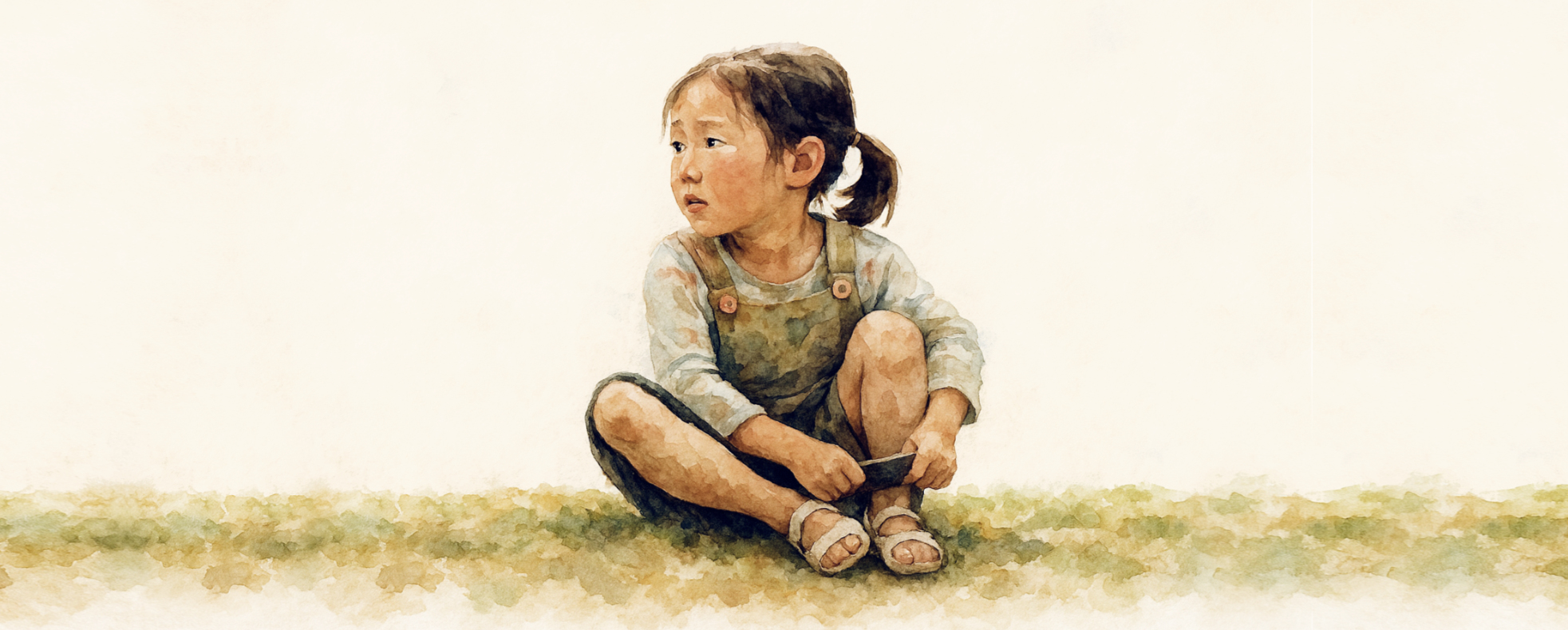
“[C]oercion from non-human sources in most people’s lives today is absolutely negligible compared with that caused by humans, specifically parents.”
– David Deutsch
From the archives: Posted on 25th June, 1996
Someone asked a series of interesting questions about the nature of coercion as “bait for Sarah”. I hope that neither he nor she will object if I answer too:
“I have heard it said on this list [the Taking Children Seriously email-based discussion group we used to have] that:
Coercion is when somebody forces you to act on one theory [theory one] while a rival theory [theory two] is still active in your mind.
To say that theory two is still ‘active’ can’t mean that it is the one you have decided to act on, which is how I took it the first time I read this.”
That is what it means, with a couple of provisos:
Proviso 1: You seem to have in mind only external actions, i.e. muscle movements. In the case of human minds, this is an unnatural distinction to make. We can take actions entirely within our minds. Indeed, human thoughts are actions, though most of them cause no immediate externally-observable behaviour. A theory is active if it is effecting some external or internal action.
Perhaps a computer analogy will be helpful. Human theories or ideas (including inexplicit ones such as values and preferences) are expressed in programs in our brains. An idea is active if the corresponding program is currently being executed.
“Provided your actions are still controlled by your mind, ‘acting on a theory’ can only mean ‘acting on the theory you have decided to act on’.”
Proviso 2: An active theory is not necessarily one that you have “decided” to act upon, it is one that you are acting upon. It is not the case that before one acts upon any theory, one must engage in a process of deliberation, ending in a decision to enact that theory.
Such a process, after all, would have to involve decision-making strategies, and be based on a set of values etc., all of which are themselves theories, and the decision would amount to acting upon those theories; so you would first have to “decide” to act upon those theories, and so on ad infinitum.
Furthermore, because of the possible conflicts between between different ideas in the mind, say between conscious and unconscious processes, it is quite possible to decide to act upon a theory, while simultaneously acting upon a rival theory (“vowing she’d ne’er consent, consented”).
Of course (to continue the computer analogy) a program does not get executed unless another piece of program “launches”, “calls” or “transfers control to” it. So in that low-level sense, something must indeed “decide” to act upon a theory before it is acted upon. If that’s all you meant, you can forget about proviso 2. It’s just that when you speak of “deciding to act upon” a theory it suggests a deliberative thought process, and there need not be one of those. There usually isn’t.
“I also thought that it might mean ‘present’, but it is obvious that conflicting theories must be present in your mind in some form constantly, or you wouldn’t be able to compare them and learn.”
Correct. A theory can be present but not active. Using the computer analogy again, a program can be present in the computer’s memory without currently being executed.
One of the most important ways in which a theory can be present but inactive, is if it is the subject of some other thought process. Consider, for example, a former Socialist deciding how to vote in an election. He still remembers his old Socialist theories and impulses, and can accurately describe how he would have reacted to given political issues before he changed his mind. So those theories are still present in his mind. Some of them will also be active during his deliberations, even though they now play quite a different role in his overall thinking; these include, for instance, theories of the form: “True Socialists believe so-and-so”. He hasn’t changed his mind about those. But those components of his former beliefs which caused political behaviour different from his current behaviour, are now inactive, though still present. Just to stress the point about internal actions, take the example how how he would feel at the thought of (say) unemployment benefit being reduced. He used to feel sadness and rage; now he feels relief and hope. Some part of the program which, when executed, used to make him feel sadness and rage, is no longer being executed. The program is still present, for he can accurately tell you about how he would have felt. But it is not active.
It might also be that such theories are still active, even though they do not affect his external behaviour. So he now feels relief, hope, and some degree of sadness and rage as well. And though he votes Conservative, he simultaneously feels an urge, albeit a weaker one, to vote Labour. If so, then he is in an irrational state, the state we call coercion. No perpetrator is necessary, according to my definition of coercion, but in practice such states are virtually always caused by acts of coercion by other people, at the time or earlier, and these people are usually the person’s parents. If you don’t like the terminology, call it “fractured integrity” or something.
Just to avoid confusion, I had better mention a third state of mind that such a person might be in. He might hold a political view that attributes some merits to the Labour Party, and some to the Conservative party, and he has arrived at a judgement that in this election, on balance, the Conservatives are better. The fact that he had to weigh opposing factors in the balance to reach this decision does not mean that his integrity has been fractured. As always, the criterion is: at the moment when he puts that little cross into the little box, is the impulse to put it into another box still active? If not, then he has wholeheartedly decided that on balance the Conservatives are better, and his integrity is unfractured.
“So:
Coercion is when somebody forces you to act on one theory while a rival theory is still [special in some way] in your mind.
Special in what way?”
I hope you now agree that “active” does make sense here after all.
“Special in this way: It is the theory of how you would act if the world around you behaved in a reasonable way. It is not reasonable for rocks to fall on you, or for nasty people to try and control your actions.”
It’s not reasonable for them to believe in unicorns either, but when they tell me about it, that does not do me any harm. As for the rocks or the nasty people, the same is true. The important thing is not what the external events are, but how I react to them within my own mind. The very rockfall or mugger that might ruin my whole day, might be exactly what a thrill-seeking mountaineer or policeman needed to make their day.
“I don’t want to call it ‘active’. To me, the active theory is the one you act on. This is the one you would act on. I shall call it ‘personal’ instead.”
Note that the theory you would act on if the other person was reasonable might well be their theory, or a new theory that you jointly created. And that’s not in your mind at all. Also note that even if you do act on the theory that you would have acted on, even though you are under externally-applied coercion (i.e. if you behave defiantly) this may still be a very unpleasant and damaging experience. Again what makes the difference between a good and a bad state of mind is not specifically whose theory, or which theory, you externally act upon, but what its rivals are doing in your mind at the time.
“Why is it important that it is somebody and not some thing which forces you to act on a theory other than your personal one? Why isn’t being hit by a falling rock which breaks your leg coercive?”
It could be. But the coercion from non-human sources in most people’s lives today is absolutely negligible compared with that caused by humans, specifically parents.
“I think that the falling rock would force you to follow a theory other than your personal theory, and that this is a definition of unhappiness. But it wouldn’t coerce you.”
It would cause you to act upon one set of ideas (those that focused on the pain, and made you say “AAAARRRGHHHH!”) while others (such as your intention to continue the pleasant train of thought you had been having, or indeed any pleasant train of thought!) remained active. That would be coercion.
“I think that the reason it has to be somebody is that, for coercion to take place, you must be aware of their theories about how you should behave, and that they are trying to make you follow their theories.”
No. It is no less harmful to a child if, as often happens, he is punished and isn’t sure what the punishment is about. In fact it can be more harmful, because a wider area of his mind can be drawn into the conflict.
“So:
Coercion is when somebody forces you to act on a theory [theory one] other than your personal theory [theory two], and they also make you aware of their theory about how you should behave [theory three].”
Apart from the flaws I have mentioned, this definition has the additional flaw of depending on a notion of someone “forcing” you to act in a given way. But what is “forcing”? You can’t just replace it by “someone causes you to act on a theory…”, because of course that would include cases of persuasion. It all hinges on what “forcing” is, and you get back to my definition.
“What I still don’t understand is why coercion has a psychological effect beyond making you unhappy, as is claimed on this list.”
Why does it have a lasting effect? Well, that question deserves an entire posting to itself. Maybe I’ll write one if no one else does.
“Or where irrationality comes into it, or in fact what irrationality is.”
More excellent questions for another posting. Any Popperians out there ready to give a good working definition of irrationality?
“I can see that a determined person is a much worse thing to be up against than a falling rock, though.”
Absolutely. The thing is, it’s not easy to fracture a person’s integrity and still leave him functioning. In most cases, human creativity is required to achieve this. Alternatively, it can also be done by memes (evolved, inherited patterns of behaviour), which is another long story.
Hope this helps for now
See also:
- “If you are not coercing your child, what do you do instead of coercion?”
- Our evolution away from coercive rules and rewards
- None of my business?
David Deutsch, 1996, ‘What sort of conflict is coercion? (Was: Bait for Sarah)’, https://takingchildrenseriously.com/what-sort-of-conflict-is-coercion