
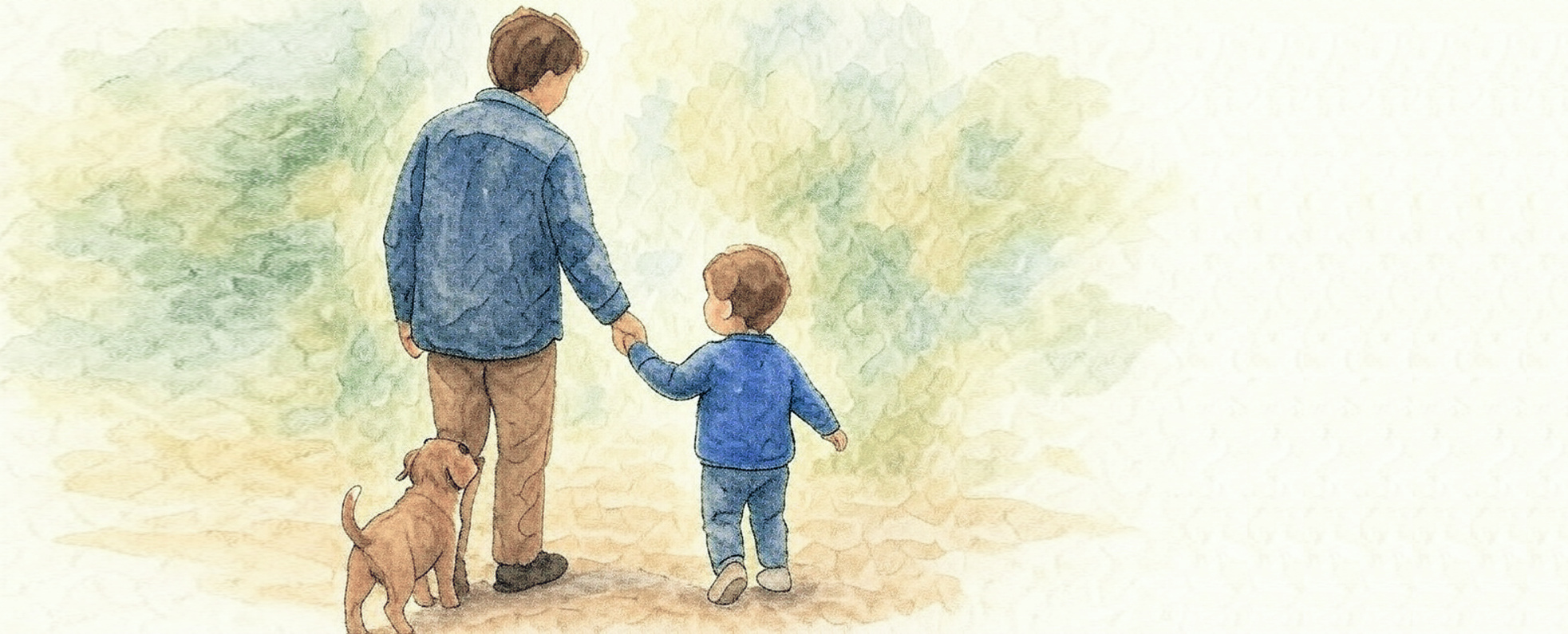
“Dogs have fixed theories: they are not rational. That is why dogs don’t have rights, but children, whose theories are changing all the time, should. (But still let’s not be unkind to dogs!)”
– Sarah Fitz-Claridge
From the archives: Posted on 31st December, 1994
Steve said:
“Rationality is disabled by coercion—I agree with that. Of course, that presumes that the subject is rational in that area to begin with. Just because the child doesn’t want his diaper changed doesn’t make it a position of reason, just as when the dog doesn’t want to be put out, we aren’t subverting his reason by forcing him out.”
Doris replied:
“I don’t understand why people pick on dogs. I’m not a pet enthusiast, actually I dislike dogs, but you can break a dog’s spirit, as well as a child’s, via coercion (excessive force).”
“Why is it necessary to differentiate between coercion of rational vs. irrational children? Force is force. Whether the child is capable of reason or not, his will is being overridden. Force may be necessary for his survival, but that really doesn’t make tolerating the coercion any easier.”
Although the child’s will may be overridden and that does not make toleration of the coercion any easier, if he isn’t capable of reason, it does make it more likely that one is right in coercing him for his own good, as with a dog. If we are really talking about a dog, then the answer is that a dog is not going to give any opposing theory. If the dog does have an underlying wish, we can’t know what it is: we can’t know what the dog wants, we can only form our own theories about what it wants. If somebody says to you, “I don’t want to”, then you know that the person has an opposing theory. One cannot say the same about a dog, since a dog does not communicate in a clear, unambiguous way.
But what if the dog is howling and yelping? Can’t we be sure it is expressing displeasure—telling us that it does not want to do this, for example? No.1 Plenty of people howl and yelp doing things they want to do. I don’t think there is such a thing as what a dog wants (in a meaningful sense), but if there is, I don’t think there is any justification for assuming that it wants, for instance, to have a minimum of pain, any more than human beings always do. If dogs want anything, it must be because they have preferences, preferences which are changing, and if they have preferences which are changing, then they won’t be the same as the preferences in the genes. Genes have wishes, and the genes may want things that the dog does not want at all. But that is not how it seems.
“The less able the child’s ability to reason, the less likely he will be able to comprehend why his wishes were overridden. The more able child may resent interference with his wishes. The first will be confused and frustrated, while the second will be angry and frustrated.”
“As to the resulting ‘disability’ caused by such force, children can react passively/submit or actively/fight back in the face of coercion. Excessive force can affect their sense of life and result in permanent scarring or a broken spirit.”
All parents want to use a “minimum” of coercion. They just differ in what they consider that minimum to be. By that, parents generally mean a minimum necessary for their will to be done.
“But I’d risk using those nappies anyway. The overall fallout from my daily frustration with soiled floors, rugs and beds would be much harder for the child to deal with than the silly nappies in the first place. I’d just improve my salesmanship and make diaper changing a very special event.😉”
To return to dogs…
Suppose I have a dog, and the dog wanted something that I could not afford, and the dog said, “All right, I’ll have less food for six months and in return, I’ll have a heated kennel,” to which I replied, “But I think if you try having less food for six months, you won’t like it.” And the dog said, “Yes, well, I think I’ll manage.” So I got him a heated kennel, and gave him less food for a while, but he found that indeed, he didn’t like having less food, and learned from that experience, and now understands better.
Can you see something intrinsically unlikely about that story? Exactly what is it that is most unlikely? One might think that the fact that the dog talks is the most unlikely aspect. But that is not essential to this type of thing, because some children can’t talk, some foreign tourists effectively can’t talk, so is that really the most unlikely aspect of this story? After all, some computers and tape recorders can talk, so what is it exactly that shows one straight away that it can’t possibly be true? I think the thing about that story that makes it impossible is the idea that the dog would change his opinion or his wishes or his nature or something without having experienced the negative pay-off. A dog is Pavlovian; it is conditioned: there is no way you can make a dog stop eating a particular kind of food which is there in front of him which he is genetically programmed to eat, except by behaviourist methods. No one can do this. You can stop him by behaviourist methods, but you can’t stop him by any other methods. In contrast, just about any child of three has got complex preferences about food which no other child has. With an animal, you can look up in an encyclopaedia what foods they like and don’t like. And the only way that you’ll get a particular animal that is different from that is by conditioned reflexes.
What this means is that dogs have fixed theories: they are not open to criticism, and they are not rational. That is why dogs don’t have rights, but children, whose theories are changing all the time, should. But just to be clear, for the benefit of all the dog-lovers, if it is the case that dogs’ theories are not fixed, and that they are in fact rational, then they are, in my view, worthy of rights, as are all other rational entities capable of bringing their theories to the table, as it were. As Popper pointed out, theories should be judged by their content, not by their source.
Notes
1. Rereading this decades later, it feels rather heartless towards dogs. I know what I meant, but my wording seems confusing: in the case of people, the mere fact that a person might be howling and yelping doesn’t necessarily mean that the person is in distress. People do and say all sorts of strange and different things for ll sorts of different reasons, and their preferences are complex and often change dramatically over time. But in the case of dogs, I do think that a howling and yelping dog does suggest that the dog is (in a dog sense anyway) distressed. My intention in the post was to convey the idea of taking creativity seriously, which dogs do not have. Nevertheless, call me anthropomorphic if you want to, but it hurts my heart to see mistreated, scared, sad-seeming dogs with their tails between their legs.
See also:
- “If we should take babies seriously, should we not take pigs seriously too?”
- What sort of conflict is coercion?
- None of my business?
Sarah Fitz-Claridge, 1994, ‘Are dogs people too?’, https://takingchildrenseriously.com/are-dogs-people-too